
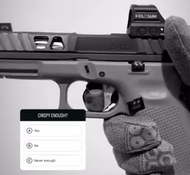
Why a Better Trigger Won't Fix Poor Pistol Mechanics
Posted by Stronghold Armament on Aug 1st 2026
Recently, a customer asked us what we thought the best everyday carry (EDC) pistol was and whether one of our platforms would be a good choice for him.
It's a great question—and one we hear often. While there are many excellent pistols on the market, the reality is that the "best" EDC pistol is rarely determined by brand, trigger, or aftermarket components alone. Instead, it's the pistol that complements a shooter with sound fundamentals and consistent mechanics.
One of the most common misconceptions among new recreational shooters is that a trigger upgrade will immediately improve their shooting performance. While aftermarket triggers can absolutely refine the shooting experience, they cannot replace sound fundamentals. In many cases, they simply expose weaknesses in a shooter's mechanics.
Modern striker-fired pistols, particularly Glock-pattern handguns, are often criticized for having "bad triggers." In reality, much of that criticism stems from a lack of understanding of proper pistol mechanics rather than a flaw in the firearm itself.
Before investing in premium components or searching for the "perfect" EDC handgun, shooters should first invest in the mechanics that allow any quality pistol to perform to its full potential.
Fundamentals Before Modifications
Every accurate shot begins long before the trigger is pressed.
Proper presentation from the holster or ready position, consistent grip pressure, sight alignment, and disciplined trigger finger placement all contribute to predictable shot placement. When any of these fundamentals break down, shooters frequently interpret the resulting inconsistencies as a trigger problem.
A heavier or less refined trigger may make poor technique more noticeable, but it is rarely the root cause.
Trigger Finger Discipline Matters
Trigger control is one of the most misunderstood aspects of pistol shooting.
Jerking, slapping, pinning, or inconsistently pressing the trigger introduces movement into the pistol before the shot breaks. Even the most expensive aftermarket trigger cannot overcome poor finger discipline.
With most striker-fired pistols, shooters should learn to smoothly take up the trigger's initial slack until they reach the defined wall. From there, the trigger should be pressed straight to the rear with steady, uninterrupted pressure until the shot breaks. Attempting to "snatch" through the wall or anticipating the break often causes unnecessary movement that degrades accuracy.
Developing the ability to consistently find the wall, apply controlled pressure through it, and maintain sight alignment throughout the entire trigger press is a learned skill—not a purchased upgrade.
What Aftermarket Triggers Actually Do
A well-designed trigger upgrade should be viewed as a refinement—not a shortcut.
Premium trigger systems can offer:
- A cleaner, more consistent break.
- A more defined wall.
- Reduced overtravel and reset distance.
- Improved tactile feedback.
- Greater consistency for experienced shooters.
These enhancements allow a shooter with solid mechanics to perform at a higher level. They do not create those mechanics.
Train First. Upgrade Second.
There is nothing wrong with improving a pistol. In fact, we appreciate well-engineered components that deliver measurable improvements in consistency and feel. However, the greatest performance gains almost always come from investing in training/range-time before investing in parts.
Mastering presentation, grip, sight management, and trigger control builds a foundation that every future upgrade can build upon.
When those fundamentals are established, a quality trigger becomes exactly what it was designed to be: an enhancement to an already capable shooter—not a substitute for proper mechanics.
At Stronghold Armament, we believe every modification should have a purpose. Premium components should complement disciplined training, not replace it. The best-performing pistol is one that combines quality engineering with sound fundamentals behind the trigger.